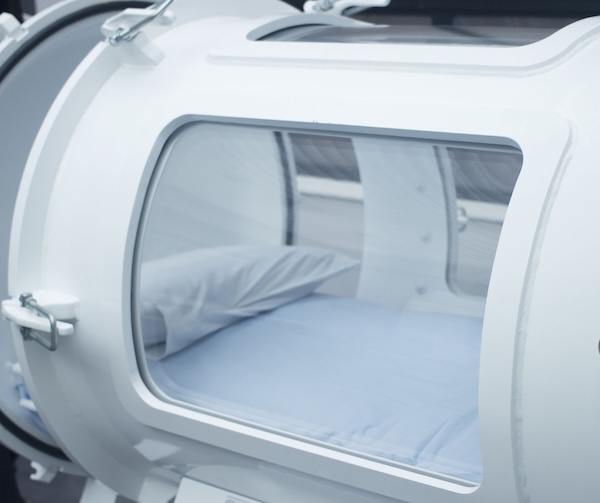
Hyperbaric oxygen therapy (HBOT) involves you getting into a special chamber to breathe pure oxygen. The increased air pressure is 2-3x higher than normal atmospheric pressure, which causes the lungs to absorb more oxygen than it would during normal conditions. Room air is 21% oxygen. Hyperbaric oxygen chambers are 100%.
A: It doesn’t.
Hyperbaric oxygen does NOT improve the oxygen saturation in your blood hemoglobin. Hyperbaric oxygen increases the dissolved oxygen in the plasma and arterial oxygen tension. So when you are at rest, your tissue gets 5-6 ml of oxygen/deciliter of blood which is delivered by your hemoglobin. When you do hyperbaric oxygen, you get 6ml/dL of oxygen dissolved in your PLASMA alone. This means your plasma can meet your basic metabolic needs, so the hemoglobin bound oxygen is extra.
This translates to 20x increase in dissolved plasma oxygen with HBOT compared to room air. This big increase in dissolved oxygen diffuses more easily into compromised tissue- poor oxygenation, poor blood flow- better than hemoglobin bound oxygen. This is why HBOT oxygenates tissue in issues of poor microcirculation, like irradiated tissue or diabetic wounds.
It is thought HBOT increases the amount of oxygen in the blood. Again, this is most vital for those who have issues- poor blood flow, infection, disease processes. This helps
For most of us, your oxygen saturation is 99-100% on room air. You have healthy tissue – no infection, no blood perfusion issues, so hyperbaric oxygen isn’t needed. The studies show it helps for those who are compromised- diabetes, nonhealing wounds, chronic infections, serious burns.
The FDA has approved hyperbaric oxygen treatment for certain conditions:
You are in a special chamber for 1-2 hours. The number and timing of sessions varies based on what you have. You could do four sessions for a week, or once a week for a month. The chambers are cleaned between patients, so in researching, it seems the risk of cross contamination is low when standard cleaning and patient screening protocols are followed.
It is interesting. If there were good studies showing it helped with healing in healthy surgical patients, I would feel more excited about it. But the studies are biased or small. Read my next Hyperbaric Blog. I have had healthy patients decide to do it and none have thought it made a big difference. But it is hard to assess.
I have used it before on patients who have had healing issues. Did it help? I don’t know how much. For sure I don’t think it hurt, and it is a solid tool in our toolbox for hard to heal wounds or infections. But with the cost, the time needed to do it, claustrophobia issues, no clear science on its benefits in healthy patients, and my worries about the chamber (is there any cross contamination? how well is it cleaned?), I don’t recommend it for the average surgical patient.
One study I read showed it had deleterious effects on mitochondrial function when HBOT was done short term. “Depending on the conditions of the HBO treatment (duration, pressure, umber of treatments), short-term treatments have been shown to have deleterious effects on both mitochondrial activity and production of reactive oxygen species.” The mitochondria are the powerhouse of every cell in your body. It is the key to healing and longevity.
If you want to optimize healing, with the data I know currently, I have other avenues I think are more appealing.
Hyperbaric Oxygen Treatment: Effects on Mitochondrial Function and Oxidative Stress, Biomolecules, 2021
The information provided on this website is for general informational purposes only and does not constitute medical advice, diagnosis, or treatment. Always seek the advice of a qualified healthcare provider for any questions regarding your health or medical condition.