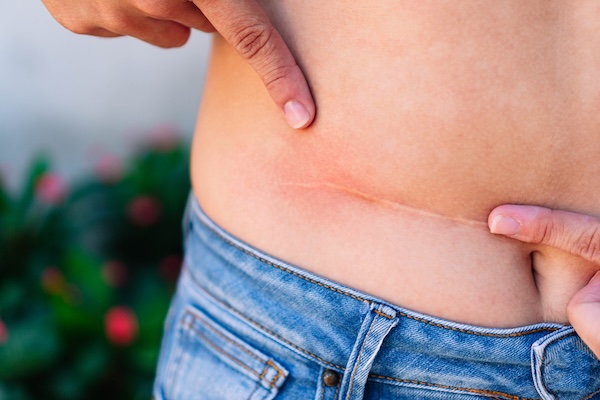
You did everything. You cleaned and did the creams and were on it. But you still got a bad scar. What do you do?
If you have a bad scar, and you are a year out, come in for an evaluation. Almost always the best place to start is to roll the dice again. When you did your first surgery it tends to be a big surgery. A tummy tuck. A breast reduction. A mommy makeover where you do breasts and body at the same time. In these surgeries we are moving lots of tissue around. There are layers of sutures.
Think of it this way- in the initial surgery you need to send the troops to the front line. But there are many front lines. When you are doing multiple areas or multiple layers of surgery, the troops get divided between all the areas to bring blood and nutrients to help your tissue heal. Blood loss, nutrition, being unable to focus on position and wound care- it can be harder to heal. Your body isn’t focusing on how pretty your scar is- it is focusing on healing all the areas and all the layers.
Simple cleaning of the scar while it is healing is important. Many people at the initial surgery are overwhelmed and they don’t look at the scar. Some scars are dry, but many are weepy. You need to clean the little scabs and discharge off the scar. This is the BEST way to get a good scar. Simple hygiene and looking at the scar every day.
This can be done topically in a gel which dries or with silicone tape. No one really knows why silicone is effective, but it is. Theories range from helping keep the incisions from losing moisture, to the process of rubbing it in is like scar massage, to the barrier effect so clothing is not rubbing on it. A head to head study with biopsies showed it to be more effective than Mederma or Vitamin E. Read my blogs on silicone here SILICONE SCAR TREATMENT.
This is using a microneedling pen on the scar to stimulate collagen and elastin production. The studies indicate the best timing to do this is around 6 weeks out. You can read the studies on it MICRONEEDLING SCAR STUDIES. In our office we have microneedling. We have used it on some scars, but not with consistent results. It can make the scar look red and irritated at first. If you have darker skin there is always the risk of inflammation and pigment changes.
We use Age Zero Exosomes, which are essentially stem cells. How to apply?
I am a fan of exosomes. I do not like the brands of exosomes which are plant sourced or sourced from adult fat. You need a human source which is age zero (embreyo/umbilical). I think there is likely little risk or downside. The reason I do not offer it to everyone is that I was only able to get it because of the trial. It isn’t for sale yet.
Studies on this are not abundant yet. And remember all exosomes are not equal! Exosome scar
Oddly, as I’m not sure who thought of this first, there are studies which show Botox can help prevent keloid formation. I have only used it a few times due to the cost, but it seems to work. There are many theories why- effects on muscle tension, fibroblast activity and more. To see the details, click BOTOX HELPS SCARS I am a fan of Botox, have used it for decades now, and don’t see much downside – I can’t imagine a bad side effect.
This is not new. Injecting a steroid at the time of scar revision has been shown to help prevent keloid formation. Steroids are in general anti inflammatory- it doesn’t let your body have such an exuberant response while it is healing, which when you have too much scar, helps. As I mentioned earlier though, steroids can do damage- scars thinning, scars widening, changing the pigment of the skin. I am excited more by some of the other modalities, but steroid injections for hypertrophic or keloid scars remains a great tool in the toolbox. STEROID SCAR BLOGS
Do you have a hyperpigmentation issue? Redness in healing scars is normal. But brown? Black? That is hyperpigmentation. I currently put all my patients on Biocorneum after surgery- it is a topical liquid silicone with SPF in it. I use this because of the prior studies- in the Asian scar summit of keloid prevention, they recommend liquid silicone as the first step for scars.
Sun exposure can “tattoo” healing scars, causing pigment, so I like that the scar cream includes sun protection in it.
But what if that hasn’t worked? Key for pigment issues is to AVOID irritation and inflammation. All my scar care tenets- clean, no infection, pad it, make sure nothing rubbing on it- are so important. Pigment is super hard to reverse.
Hydroquinone is a “skin bleacher.” There are some concerns about HQ, so if I have patients use it, I only use the 4% and we only have them use it for a short time on the hyperpigmented area of the scar. But it can be effective.
This is a discussion to have with me. We can review what is going on, what we think the cause was, and what your options are. They vary in cost, time to heal, etc. These are tinkers- done under local anesthesia, in the office, not interrupting work/life. Almost always you want to wait until you are a year out so your body is healed and the scar is mature. If the scar isn’t mature, it still may be inflamed, which would impair healing and stack the deck against you for making a pretty scar.
I almost always think it is worth it to try. In my practice, it is usually a simple in office procedure under local anesthesia. There are some people who just don’t heal well, likely from genetics, but for most a scar revision, with or without some of the things listed above, helps.
The information provided on this website is for general informational purposes only and does not constitute medical advice, diagnosis, or treatment. Always seek the advice of a qualified healthcare provider for any questions regarding your health or medical condition.