I read this headline in US Magazine. This is tragic. I do not know the details, but it inspired me to write another blog. (To read their article, click HERE)

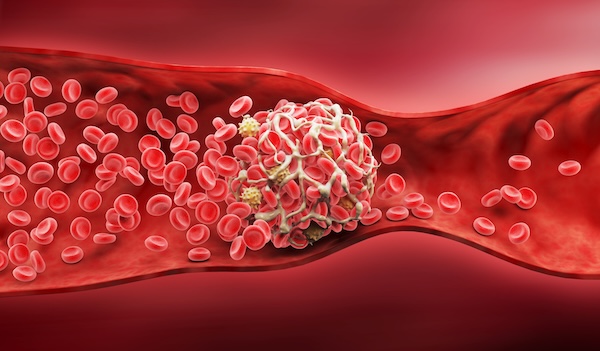
When you hear about blood clots in surgery, we are not talking about normal clotting needed to stop bleeding. In fact, we plastic surgeons make you stop blood thinners before surgery to reduce bleeding risk. But when is a blood clot bad? dangerous?
What we worry about is a DVT or PE. DVT = Deep Vein Thrombosis. PE = Pulmonary Embolus. This is when the deep veins form a blood clot. We don’t actually care about a clot in your leg- it may cause pain or swelling, or it may be silent. What we care about is when that clot dislodges it can go up and land in your lung. That is a pulmonary embolus. If the blood vessels in your lung are blocked, air exchange cannot occur. If you can’t get rid of carbon dioxide and get new oxygen, if that embolus is big enough, you can die.
If you hear of someone dropping dead, particularly about a week after surgery or in a young healthy person, this is the number one concern.
There are many reasons for blood clots to occur.
This was a score developed by, you guessed it, Dr. Joseph Caprini, a researcher at U of Chicago in 1991. They used 20 factors to stratify surgical risk for blood clots in patients. It has been validated and updated multiple times. You can find many variations of the score, which assess point scales slightly differently.
At my center we do the Caprini Score on all surgical patients. If you score above a 7 on our scale (and note: there are many versions of the Caprini Score now, which all have different numerical scales for when you need to anticoagulate), we will use Lovenox anticoagulation around the time of surgery to lower the risk of blood clots. Below that score, the risk of a DVT is lower than the risk of bleeding from use of anticoagulation. Even with a score of 7, the risk is still low for most patients.
On all of our patients we institute procedures to avoid blood clots, regardless of Caprini score. It is just good medicine.
When doing elective cosmetic surgery safety is everything. Period. You can see my blogs on DVT risk going back to when I started blogging over a decade ago. DVT blogs
This is something to be taken seriously. If you or a family member has a history of blood clots, DVT, or pulmonary embolus you need to alert your surgeon. Times you may hear of blood clotting issues are after a long plane flight, during pregnancy, after starting birth control, or with a prior surgery or fracture.
Systematic review of venous thromboembolism risk categories derived from Caprini score, Journal of Vascular and Surgical Venous Lymphatic Disorders, Nov 2022
The Thresholds of Caprini Score Associated With Increased Risk of Venous Thromboembolism Across Different Specialties: A Systematic Review, Annals of Surgery June 2023
The information provided on this website is for general informational purposes only and does not constitute medical advice, diagnosis, or treatment. Always seek the advice of a qualified healthcare provider for any questions regarding your health or medical condition.