Exosomes are increasingly being used in Aesthetics. This journal article as a literature review to get a snapshot of types of exosomes and their uses. I think it is a good overview.
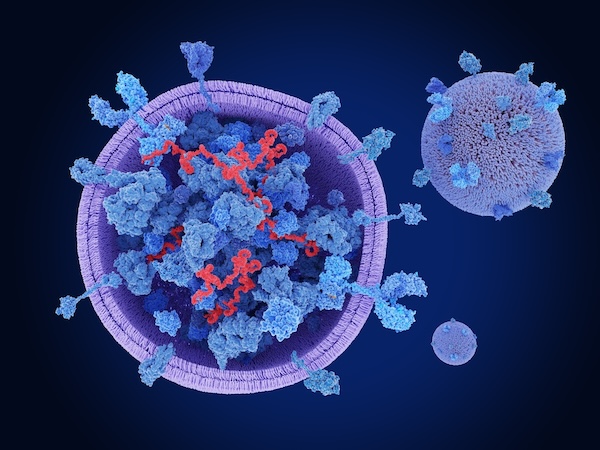
Exosomes are small vesicles, 40-160nm in size. They were originally called “cellular garbage disposals” as they carried proteins, nucleic acids and lips from cellular endosomes. They were then found to play a vital role in how cells communicate with each other and immune function. They are now considered an important category of extracellular vesicles, which contain microRNA, messenger RNA, transcription factors, and peptides.
Exosomes have a range of possible applications, including stem cell maintenance, biomarkers, help with chemotherapy and drug delivery, and wound healing (angiogenesis.)
Turns out, sources are plentiful and different in their characteristics. Current major sources:
Prices vary considerably. All these products are used topically. None are FDA approved yet. They also vary in how they are processed and stored. Some come frozen in solution and have to be thawed for use. Others are lypholized and sent dry, to be reconstituted.
The question will come with future exosome use is – which kind do you use? how do you apply it? how much? how long? Right now I think we are using pluripotential cells and it helps broadly. I expect in the future we will be more targeted.
There are animal and cell model studies touting their effect in skin rejuvenation, scar revision, hair restoration, and fat graft survival. There are several areas which show promise, but further studies are needed.
This was a literature search looking for any studies on exosomes, secretome, ECVs in aethetic medicine. They found 62 exosome relevant articles.
Bad scars can be widened, hypertrophic, or keloid. Exosomes may help with scarring by their effect on wound healing. There are well known stages of healing- hemostasis, then inflammation, then the proliferative healing phase, ending with the remodeling phase.
These studies are deep in the science of healing. To see the original studies, go to the original journal article to see the citations.
Your hair has phases, with anagen being the growth phase. Exosomes stimulate the conversion from telogen to anagen and delay the progression to catagen, the resting phase. This results in a longer anagen phase — hair growth. This has been shown in multiple studies.
They discuss how minoxidil and finasteride are basically vasodilators and increase blood flow. These both are FDA approved for hair, but they are not specific to hair- they just bring more blood to the hair. In contrast, exosomes stimulate the growth and viability of DPCs, which may be more effective in hair loss restoration than minoxidil.
One study by Huh and Kwon showed exosome treatment for 12 weeks resulted in increased hair density and thickness, with no side effects reported.
Several published studies show using exosomes with fat grafting increases fat graft survival. It is thought to help because of the regenerative and angiogenic properties of fat stem cells. How to apply it, how much, etc needs to be defined.
Exosomes have real effects. I have seen it personally with myself and my patients. I think source and quality are very important. I use two products which are “age zero” (embreyonic, umbilical), human sources, and high quality products. It makes sense to me that you should not process and dry out the exosomes. It makes sense that they need to be frozen and refrigerated. It makes sense to me that they should have a shelf life.
I use exosomes with microneedling to the skin for skin improvement, to the scalp for hair growth, and topically for skin rejuvenation. See my other blogs. I have also done a trial for scar care, comparing different formulations of exosomes (liquid, gel).
I agree we need more data. What is the correct form, source, dose, way to apply it, length of time to apply it, etc. But I think exosomes and regenerative medicine is the future. I’m on board.
The information provided on this website is for general informational purposes only and does not constitute medical advice, diagnosis, or treatment. Always seek the advice of a qualified healthcare provider for any questions regarding your health or medical condition.